Why Understanding the Time Value of Money Can Change Your Life
Royal Palm Beach, Wellington, and Loxahatchee Residents:
If you’ve read our note on why a tax dollar saved today is worth more than one saved tomorrow, you’ve already met this idea in miniature. The time value of money is the full version, and it’s deceptively simple: a dollar in your hand today is worth more than a dollar promised to you later, because today’s dollar can start earning immediately.
That’s it. That’s the whole concept. But once you actually see what it does over a working lifetime, it reorganizes how you think about saving, borrowing, and nearly every financial decision you’ll make.
The cost of waiting is bigger than the cost of contributing
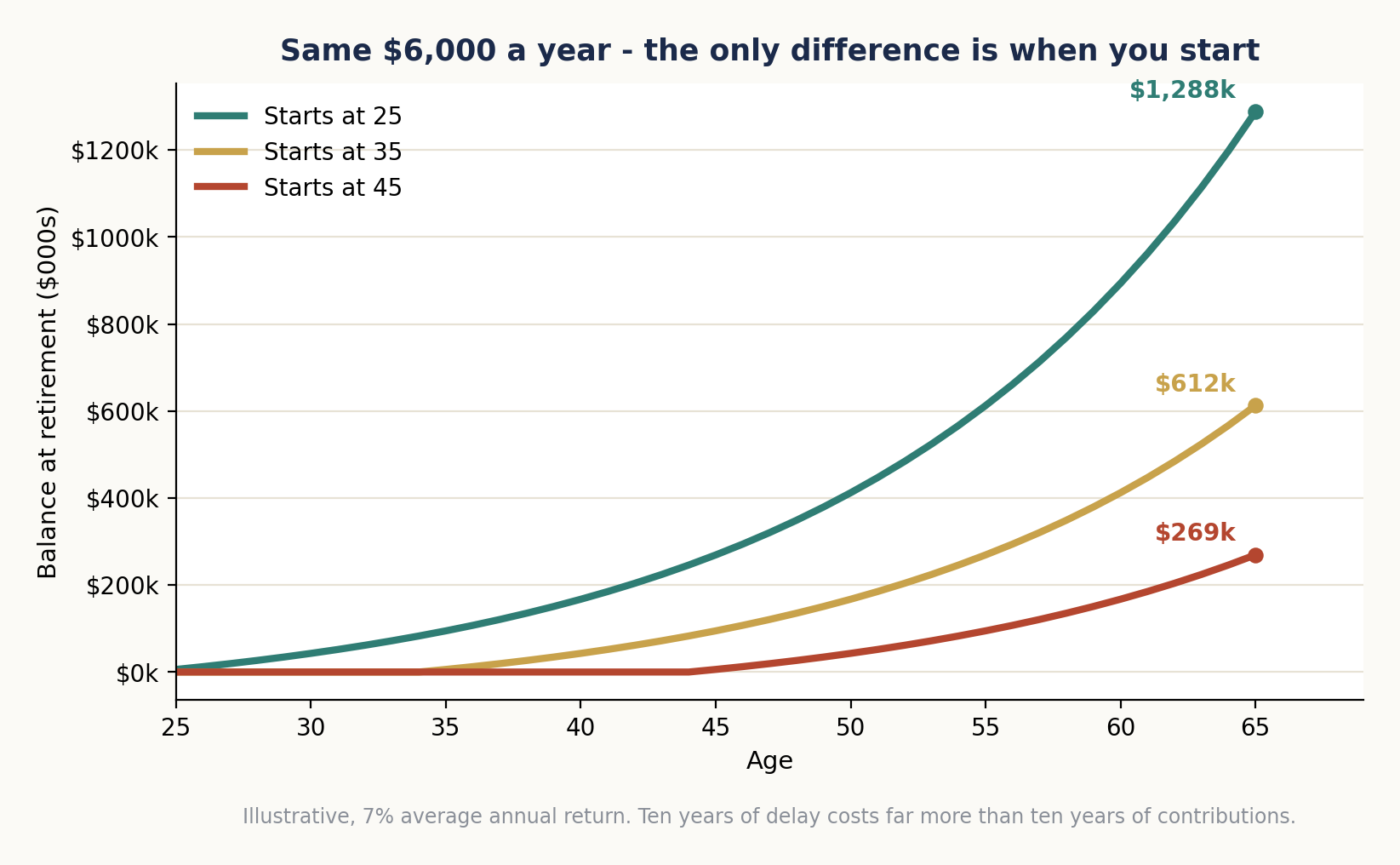
Here’s the example that tends to stop people in their tracks. Three people each save $6,000 a year until 65. The only difference is when they begin. The person who starts at 25 ends up with roughly $1.29 million. Starting at 35 gets you about $612,000 — less than half — despite contributing only ten fewer years. Starting at 45 leaves you near $269,000.
Notice what that means: the saver who began at 25 contributed $60,000 more than the one who began at 35, but ended up with about $676,000 more. The extra money didn’t come from working harder. It came from time.
Why it compounds: the Rule of 72
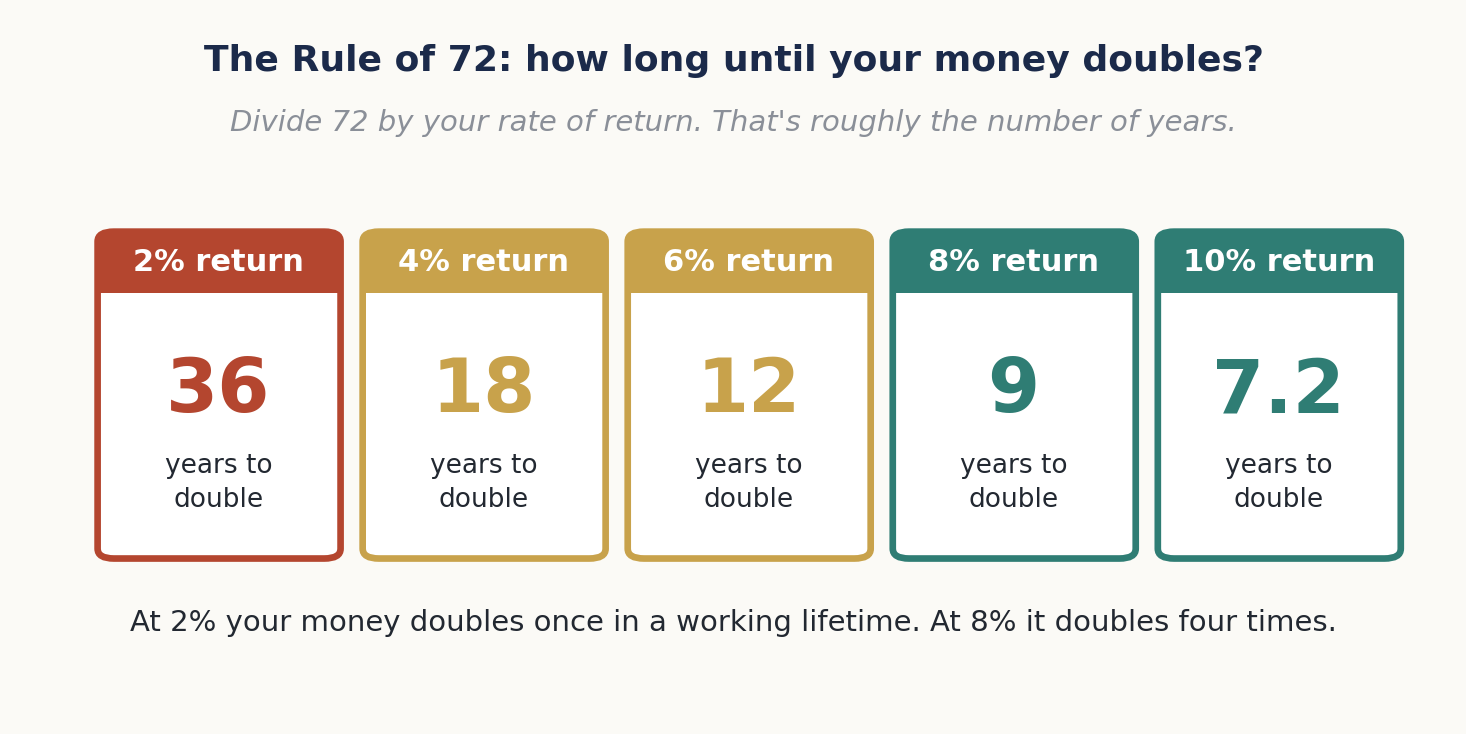
There’s a shortcut for seeing this. Divide 72 by your annual rate of return and you get roughly the number of years it takes your money to double. At 8%, money doubles about every nine years. Over a 36-year career, that’s four doublings: $10,000 becomes $20,000, then $40,000, then $80,000, then $160,000. At 2%, you get one doubling in the same span. This is why the rate you earn and the years you allow matter enormously more than the exact amount you start with.
Running it backwards: what a future dollar is worth today
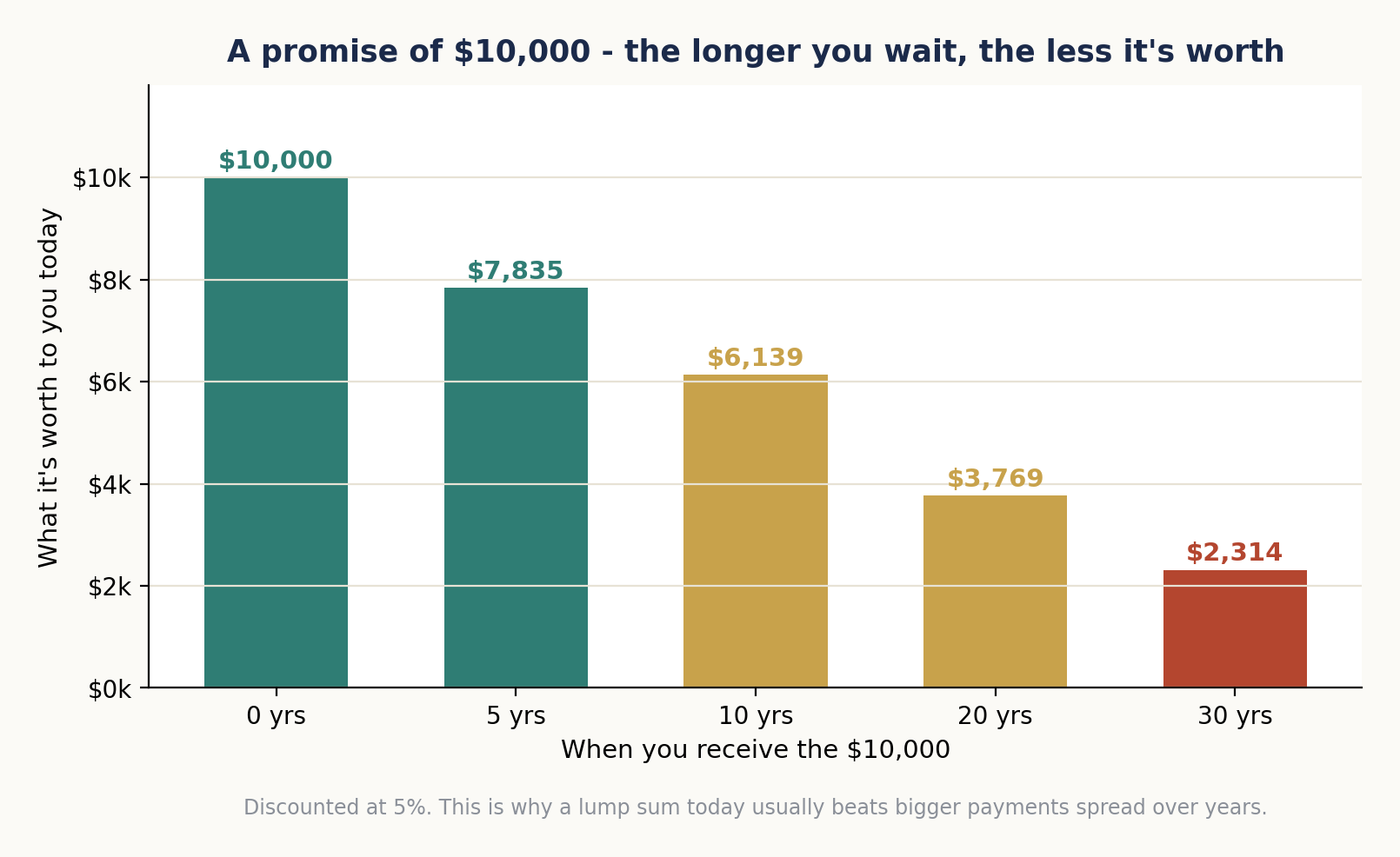
The concept works in reverse too, and this is where it earns its keep in real decisions. If someone offers you $10,000 ten years from now, what’s that actually worth right now? Discounted at 5%, that promise is worth about $6,100 today — and only around $2,300 if you have to wait 30 years. This is the math behind structured settlements, lottery lump-sum offers, pension buyouts, and installment sales. When someone offers you “more money, just later,” this is how you check whether it’s genuinely more.
The same force, pointed at you
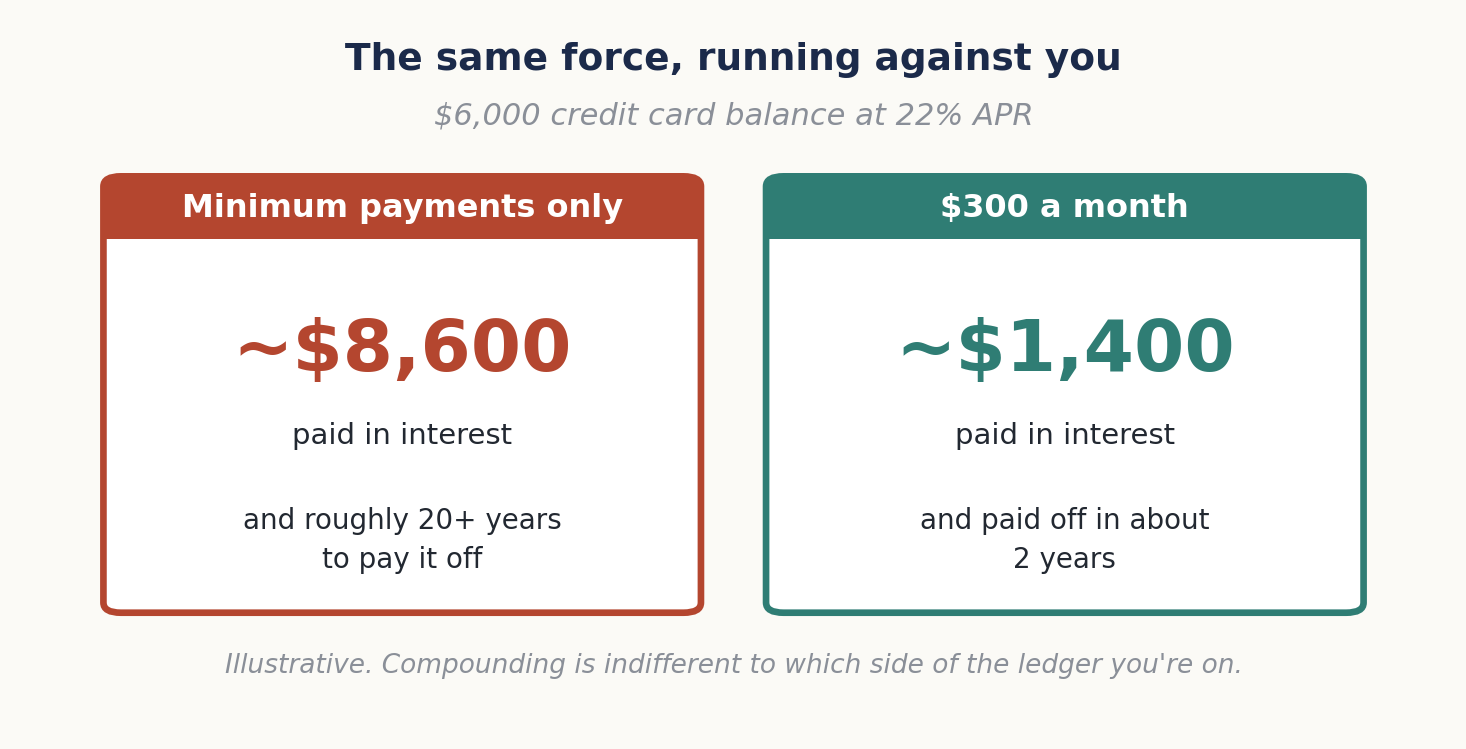
Compounding doesn’t care which direction it runs. The reason credit card debt is so punishing is that it’s the identical math working against you. A $6,000 balance at 22% paid at the minimum can cost roughly $8,600 in interest and take two decades to clear. The same balance at $300 a month costs about $1,400 and is gone in around two years. Nothing changed except time — which is precisely the point.
What to actually do with this
Start now, even small — a modest amount invested today outruns a large amount invested in ten years. Treat high-interest debt as an emergency; paying off a 22% card is a guaranteed 22% return. Automate your saving, because compounding rewards consistency far more than timing or cleverness. Question every “more money, later” offer by discounting it back to today. And mind the rate: a percentage point or two, over decades, is life-changing money.
The bottom line
The time value of money isn’t an abstraction — it’s the reason two people with identical incomes can retire in completely different circumstances. You can’t manufacture more time, which makes it the one financial resource worth spending immediately. The best day to start was years ago. The second-best is today.
This article is for general educational purposes and is not tax, legal, or investment advice. All figures are illustrative and assume steady returns (7% for the retirement example, 5% for discounting); actual results vary and markets fluctuate. Please reach out to discuss your specific situation.
